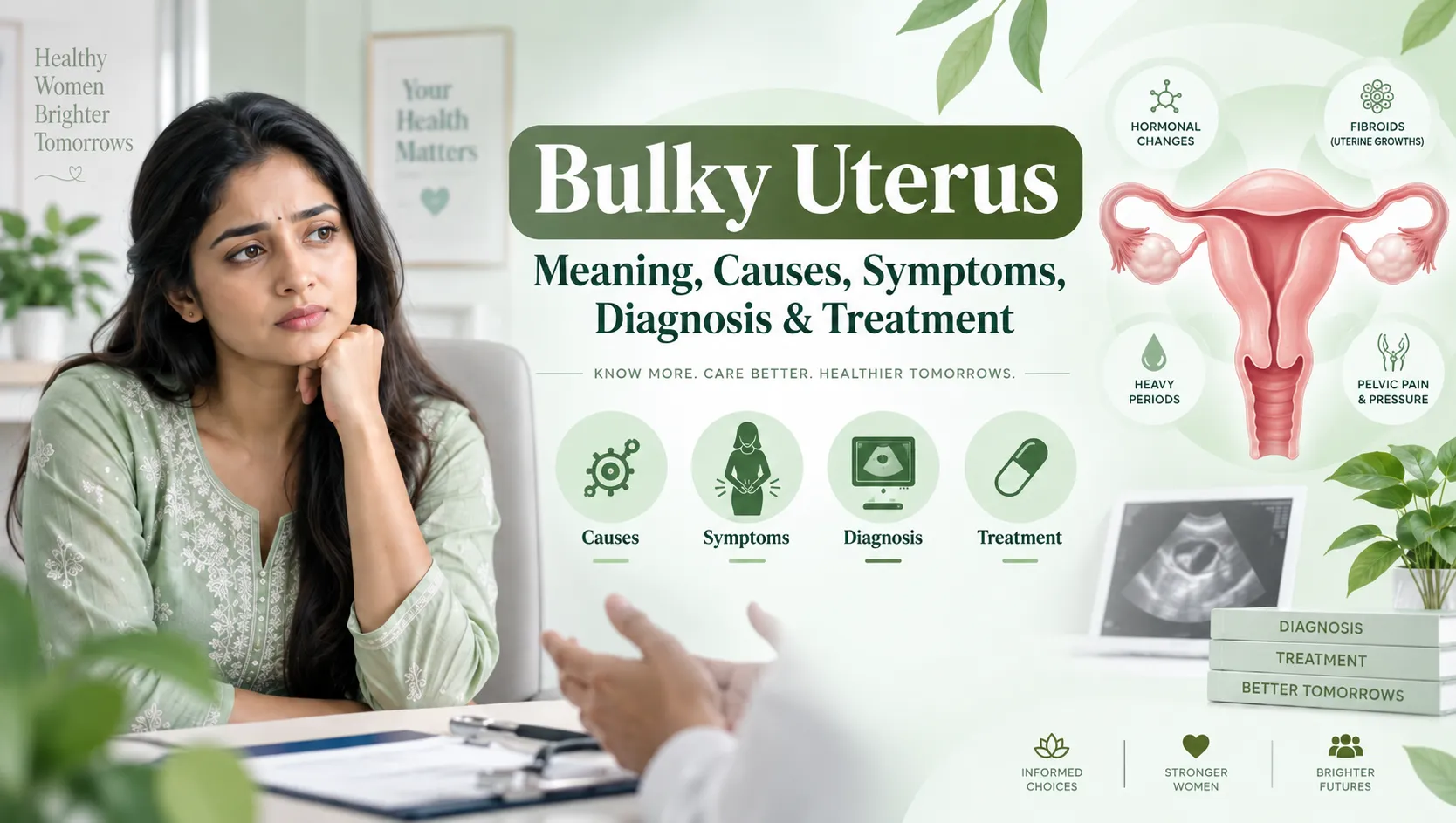
A bulky uterus is a descriptive medical term for a uterus that is larger than its typical non-pregnant size. A healthy, non-pregnant uterus usually measures around 7 to 8 cm in length and weighs approximately 60 to 80 grams, although normal size can vary between women.
When an ultrasound or pelvic examination shows that the uterus is enlarged outside pregnancy, it may be described as a bulky uterus. It is not a disease by itself, but can be associated with conditions such as fibroids, adenomyosis, hormonal changes, or other gynecological conditions.
In this blog, we will explain bulky uterus meaning, causes, symptoms, diagnosis, treatment, and whether a bulky uterus is dangerous.
What Is a Bulky Uterus?
The uterus is a hollow, muscular organ located in the pelvis. Its size can naturally vary depending on a woman’s age, hormonal status, pregnancy history, and stage of life.
When an ultrasound report describes the uterus as “bulky,” it generally means that the uterus appears somewhat enlarged compared with the expected size.
A bulky uterus does not automatically mean that something serious is wrong. The significance depends on:
-
The actual size and shape of the uterus
-
The woman’s age
-
Whether she has had previous pregnancies
-
Associated symptoms
-
Ultrasound findings
-
Presence of fibroids, adenomyosis, or other conditions
Therefore, the ultrasound finding should always be interpreted along with symptoms and medical history.
Bulky Uterus Meaning
The bulky uterus meaning is simply an enlarged uterus. It is a descriptive term commonly used in ultrasound reports rather than a specific diagnosis.
Some women may have a slightly larger uterus without any major health problem. In others, enlargement may occur because of changes within the uterine muscle or the presence of growths such as fibroids.
The cause should therefore be identified before deciding whether treatment is needed.
What Is a Mildly Bulky Uterus?
A mildly bulky uterus means that the uterus is slightly enlarged but may not be significantly different from its expected size.
It may be seen in women who:
-
Have previously been pregnant
-
Are approaching menopause
-
Have early adenomyosis
-
Have small fibroids
-
Are experiencing hormonal changes
A mildly bulky uterus without symptoms may sometimes only require observation. However, the doctor may advise further evaluation if there are abnormal periods, pain, pressure, infertility, or other concerns.
What Causes a Bulky Uterus?
Several conditions can cause the uterus to become enlarged.
1. Uterine Fibroids
Fibroids are non-cancerous growths that develop from the muscular tissue of the uterus.
Depending on their number and size, fibroids may enlarge the uterus and cause symptoms such as:
-
Heavy menstrual bleeding
-
Longer periods
-
Pelvic pressure
-
Frequent urination
-
Lower abdominal discomfort
Some fibroids cause no symptoms and are discovered during a routine ultrasound.
2. Adenomyosis
Adenomyosis occurs when tissue similar to the uterine lining grows into the muscular wall of the uterus.
It may cause the uterus to become enlarged or bulky and can be associated with:
-
Painful periods
-
Heavy menstrual bleeding
-
Pelvic pain
-
Abdominal heaviness or pressure
The condition is more common during the reproductive years.
3. Pregnancy
The uterus naturally increases in size during pregnancy to accommodate the developing baby.
Therefore, an enlarged uterus during pregnancy is a normal physiological change.
4. Hormonal Changes
Hormonal changes can influence the uterine muscle and conditions such as fibroids or adenomyosis.
Changes in estrogen and progesterone levels may therefore contribute indirectly to uterine enlargement in some women.
5. Previous Pregnancies
The uterus may remain slightly larger in women who have previously given birth compared with women who have never been pregnant.
This does not necessarily indicate a medical problem.
6. Other Gynecological Conditions
Less commonly, other uterine or pelvic conditions may also cause uterine enlargement. An ultrasound and clinical examination help determine the underlying cause.
What Are the Symptoms of a Bulky Uterus?
A bulky uterus itself does not always produce symptoms. Symptoms usually depend on the condition responsible for the enlargement.
Possible symptoms include:
-
Heavy or prolonged periods
-
Painful periods
-
Pelvic pain
-
Feeling of heaviness in the lower abdomen
-
Abdominal bloating
-
Pressure on the bladder
-
Frequent urination
-
Constipation in some cases
-
Pain during sexual intercourse
-
Difficulty conceiving in certain conditions
Some women may have a bulky uterus on ultrasound despite having no symptoms at all.
Can a Bulky Uterus Cause Heavy Periods?
Yes, depending on the underlying cause.
Conditions such as fibroids and adenomyosis can affect the uterine muscle or lining and may lead to heavier or longer menstrual bleeding.
If periods become unusually heavy, last longer than usual, or are associated with weakness or dizziness, medical evaluation is recommended.
Can a Bulky Uterus Cause Pain?
A bulky uterus may be associated with pelvic pain if the enlargement is caused by conditions such as adenomyosis or fibroids.
Pain may occur:
-
During periods
-
In the lower abdomen
-
During sexual intercourse
-
As a constant feeling of pelvic pressure
However, not every woman with an enlarged uterus experiences pain.
Is Bulky Uterus Dangerous?
A common concern is: is bulky uterus dangerous?
In most cases, a bulky uterus is not dangerous by itself. It is an ultrasound finding, and its importance depends on the underlying cause.
For example, a slightly enlarged uterus without symptoms may not require treatment. On the other hand, fibroids or adenomyosis causing heavy bleeding, severe pain, anemia, or fertility problems may need medical management.
Rare causes of uterine enlargement may require further investigation, which is why persistent symptoms should not be ignored.
Can a Bulky Uterus Affect Pregnancy?
Having a bulky uterus does not automatically mean that pregnancy will be difficult.
Its effect on fertility depends mainly on the underlying condition.
For example:
-
Some fibroids may affect the uterine cavity or interfere with implantation.
-
Adenomyosis may be associated with fertility difficulties in some women.
-
A mildly bulky uterus without significant abnormalities may not affect fertility at all.
Women trying to conceive should be evaluated based on their age, symptoms, ultrasound findings, ovarian function, fallopian tubes, and partner’s fertility factors rather than the uterine size alone.
How Is a Bulky Uterus Diagnosed?
A bulky uterus may first be suspected during a pelvic examination or detected through imaging.
Pelvic Ultrasound
Ultrasound is commonly used to assess:
-
Size of the uterus
-
Shape of the uterus
-
Thickness and appearance of the uterine wall
-
Fibroids
-
Signs suggestive of adenomyosis
-
Ovaries and surrounding pelvic structures
Pelvic Examination
A gynecologist may sometimes detect enlargement of the uterus during a pelvic examination.
MRI
In selected cases, an MRI may be recommended when more detailed imaging is required, particularly when evaluating adenomyosis or complex uterine conditions.
Blood Tests
If heavy periods are present, blood tests may be advised to check for anemia or other relevant conditions.
Bulky Uterus Treatment
Bulky uterus treatment depends entirely on the underlying cause, severity of symptoms, age, and future pregnancy plans.
A bulky uterus itself does not always require treatment.
1. Observation
If the uterus is only mildly enlarged and there are no significant symptoms, the doctor may recommend observation and follow-up.
2. Medicines
Medicines may be prescribed to manage symptoms such as:
-
Heavy menstrual bleeding
-
Period pain
-
Hormonal symptoms
The type of medication depends on the diagnosed condition.
3. Treatment for Fibroids
Fibroid treatment depends on their:
-
Size
-
Number
-
Location
-
Symptoms
-
Effect on fertility
Options may range from observation and medicines to procedures or surgery in selected cases.
4. Treatment for Adenomyosis
Treatment may include medicines to control pain and bleeding. Other treatment options may be considered depending on the severity of symptoms, age, and fertility plans.
5. Surgery
Surgery is not required for every bulky uterus.
It may be considered when symptoms are severe, other treatments have not helped, or there is a specific condition requiring surgical management.
Does a Mildly Bulky Uterus Need Treatment?
Not always.
If a mildly bulky uterus is found incidentally and the woman has no significant symptoms, treatment may not be required.
The gynecologist may instead recommend monitoring, especially if there are no concerning findings on ultrasound.
Treatment becomes more relevant when the enlargement is associated with:
-
Heavy periods
-
Significant pain
-
Anemia
-
Infertility
-
Pressure symptoms
-
Rapid or unexplained change in uterine size
When Should You See a Gynecologist?
Consult a gynecologist if you experience:
-
Very heavy periods
-
Periods lasting longer than usual
-
Severe menstrual pain
-
Persistent pelvic pain
-
Pressure or heaviness in the lower abdomen
-
Bleeding between periods
-
Difficulty becoming pregnant
-
Increasing abdominal swelling
-
Unexplained changes in your menstrual cycle
These symptoms do not necessarily indicate a serious problem, but appropriate evaluation can help identify the cause.
Conclusion
A bulky uterus simply means that the uterus appears larger than expected and is not a disease on its own. Conditions such as fibroids, adenomyosis, previous pregnancy and hormonal changes may contribute to uterine enlargement.
A mildly bulky uterus without significant symptoms may not require treatment, while women experiencing heavy periods, pelvic pain, pressure or fertility concerns may need further evaluation. Bulky uterus treatment should therefore be based on the underlying cause rather than uterine size alone.
If you have been diagnosed with a bulky uterus or are experiencing menstrual or reproductive health concerns, you can consult Dr. Smita Jain, best IVF specialist in Ghaziabad , for appropriate evaluation and treatment guidance.
Frequently Asked Questions About Bulky Uterus
1. Can a bulky uterus return to normal size?
It depends on the underlying cause. In some cases, the uterus may reduce in size after hormonal changes or pregnancy-related changes settle. If enlargement is due to fibroids or adenomyosis, the size may remain increased unless the condition changes or is treated.
2. Can a bulky uterus cause weight gain?
A bulky uterus itself does not usually cause overall weight gain. However, a significantly enlarged uterus due to large fibroids may cause abdominal fullness or make the lower abdomen appear more prominent.
3. Can a bulky uterus cause back pain?
A markedly enlarged uterus may sometimes create pressure in the pelvis and contribute to lower back discomfort. However, back pain has many possible causes, so it should not automatically be attributed to the uterus.
4. Can a bulky uterus cause frequent urination?
Yes, if an enlarged uterus presses on the bladder, some women may experience increased urinary frequency or a feeling of bladder pressure.
5. Is a bulky uterus the same as uterine fibroids?
No. A bulky uterus describes an enlarged uterus, while fibroids are non-cancerous growths within or around the uterus. Fibroids are one possible cause of uterine enlargement.
6. Is a bulky uterus the same as adenomyosis?
No. Adenomyosis is a specific condition involving tissue growing within the muscular wall of the uterus. It can make the uterus bulky, but not every bulky uterus is caused by adenomyosis.
7. Can a bulky uterus affect sexual intercourse?
Some women with an enlarged uterus, fibroids, or adenomyosis may experience pelvic pressure or discomfort during intercourse. This depends on the cause and severity of the enlargement.
8. Can menopause reduce the size of a bulky uterus?
In some women, fibroids and hormone-sensitive uterine conditions may shrink after menopause because estrogen levels decrease. However, this does not happen in every case.
9. Does a bulky uterus always need surgery?
No. Surgery is not required simply because the uterus is described as bulky. Treatment depends on symptoms, the underlying cause, age, fertility plans, and the findings on examination or imaging.
10. Can a bulky uterus become cancerous?
A bulky uterus itself is not cancer. Most common causes, such as fibroids and adenomyosis, are benign. However, unusual symptoms or unexpected changes should be evaluated by a gynecologist to rule out less common conditions.